Choosing a Shopify theme? What enterprise retailers should consider

Choosing a Shopify theme can sometimes seem like a simple design decision. Until your organization operates across multiple countries, multiple teams are working on the storefront, and performance has a direct impact on revenue. That’s when you quickly discover that a Shopify theme determines much more than the look and feel of your webshop. It affects performance, scalability, manageability, and the speed at which your organization can innovate.
Standard theme, headless or composable?
Should you actually choose a Shopify theme when terms like headless and composable are constantly being thrown around? The differences:
- Shopify theme: In a traditional Shopify setup, the storefront runs entirely within Shopify, based on a selected theme. Many organizations choose this because of its simple management, fast implementation, and seamless integration with the Shopify ecosystem.
- Headless commerce: In this setup, the storefront is separated from Shopify. Shopify remains the commerce engine, while a separate CMS tool powers the front end. This offers a great deal of creative freedom but increases technical complexity.
- Composable commerce: This combines multiple systems. For example, Shopify for commerce, supplemented with specialized tools for search, content, or personalization. Flexible and scalable, but it requires clear governance to keep complexity manageable.
Why a Shopify theme is a strategic choice
For many organizations, the Shopify theme landscape feels like a jungle. Hundreds of themes and dozens of frameworks to choose from. Organizations often start with the question: which Shopify theme best matches our brand's look & feel? But in addition to design and features, the choice of a theme also determines the level of technical complexity and manageability of your storefront. Important to consider when choosing your Shopify theme.
The balance between speed, flexibility, and customization
Every Shopify theme offers a different degree of freedom and flexibility. This directly impacts the way you develop and manage your storefront. We highlight a number of options for you:
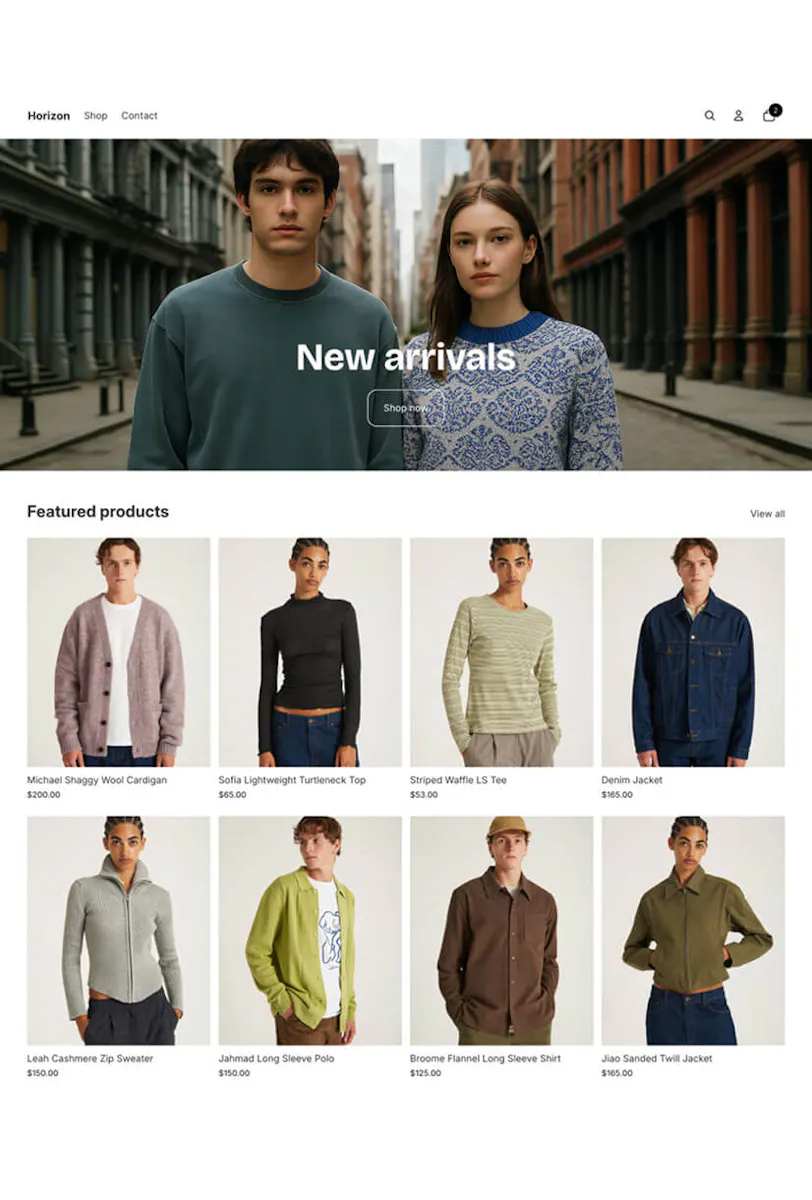
Horizon: flexibility for visual storefronts
Dawn was Shopify's default theme for years; today, Horizon has taken over that role. Horizon focuses on flexibility and creativity from a visual perspective and offers room for creative layouts, storytelling, and content-driven storefronts. Retailers looking to bring marketing, content, and commerce closer together often turn to this theme.
Key characteristics:
- More design freedom
- Suitable for content-rich storefronts
- Modern user experience
- Focus on conversion and branding
- Flexible component structure
Among others, our client BARTS uses this Shopify theme.
Skeleton: performance-first and developer-focused
Instead of a fully developed Shopify theme with many standard components, Skeleton provides only a technical foundation on which development teams can continue building. Not an "out-of-the-box" theme like Horizon, but a blank canvas. The goal: maximum performance and maximum control over the codebase.
Key characteristics:
- Strong focus on performance
- Minimal codebase without styling
- Develop the front end from scratch
- Modern developer workflows
- Scalable technical foundation
As a result, Skeleton is primarily interesting for mature e-commerce organizations that do not want to run into the limitations of traditional Shopify themes. However, this approach does require sufficient technical knowledge and development capacity, either in-house or through an agency such as XSARUS.
Third-party themes: get started quickly with a proven foundation
In addition to Shopify's own themes, there are also many third-party themes available, such as Prestige, Impact, and Enterprise. These themes often offer more pre-built components than standard Shopify themes and are frequently aimed at specific needs, such as storytelling, merchandising, or complex product catalogs.
Key characteristics:
- Many ready-made components and templates available
- Fast time-to-market
- Relatively low development costs
- Fewer customization options
- A lot of functionality available immediately
This approach also comes with limitations. You depend on the theme developer for new functionalities, support for Shopify updates, and customizations. Therefore, third-party themes are particularly suitable for organizations that are satisfied with a ready-made foundation without immediately investing in a fully custom storefront.
Make the choice that fits your digital strategy
The Shopify market is evolving rapidly. New themes and developments follow one another at a fast pace. One question remains central: which approach best supports your organization? XSARUS helps your organization make those choices. You benefit from 26 years of experience, a wealth of Shopify knowledge and expertise to future-proof your IT landscape.