High-converting designs that stay true to your brand identity

A high-converting design plays a key role in the success of your webshop. At the same time, you want to preserve your brand identity to give customers a familiar and consistent experience. But how do you balance these two goals? We share our approach to creating visually appealing, conversion-focused designs without compromising your brand identity.
Do you recognise this challenge? One part of your team wants a design that fully reflects the brand. Another part focuses mainly on functionality and maximum conversion. A familiar example is a large hero banner on the homepage. Great for branding, less effective for driving users further into the shop.
How do you balance brand identity and conversion-focused design?
1. Put the customer first
A common mistake is making design decisions based on personal preference instead of what appeals to the target audience. A high-converting design starts with understanding the customer’s pain points and needs. User research plays a crucial role here. Methods and tools such as personas, customer journey mapping, Google Analytics, Hotjar, and customer sessions provide valuable qualitative insights.
2. Define the visual direction
Once you understand the needs of your audience, the next step is concept development. This translates the brand into visual expressions. Elements such as colours, typography, and imagery come together through the brand book to form a consistent visual identity.
This process goes beyond sketching and designing. It is essential to apply the visual style consistently across all components. These guidelines are documented in a design system. The goal? Create a recognisable identity that customers immediately associate with your brand, even without seeing the logo.
3. Consistency strengthens brand identity
A strong brand identity depends on communicating a clear and consistent message. Your brand should feel recognisable everywhere: from the website to customer service and even physical stores. This requires regular evaluation of all brand expressions. Do your social posts, advertising visuals, website design, and physical store experience still align?
When your business maintains this consistency, customers build trust faster and your brand identity grows stronger.
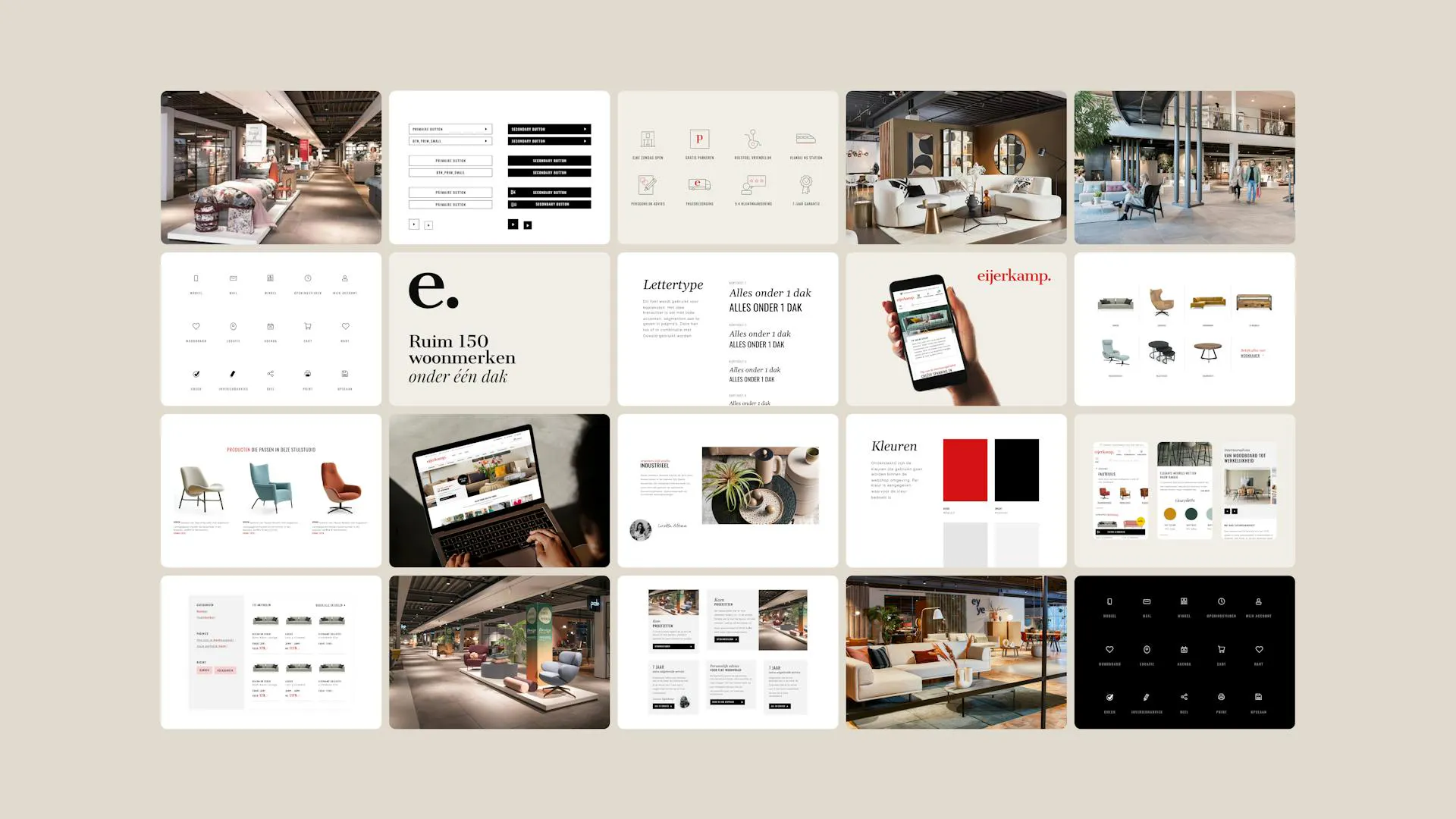
Essential design elements for conversion
A high-converting design focuses on:
- Visual identity: Colours, typography, and photography that appeal to customers
- Readability: White space and a clear visual hierarchy
- User experience: Effective copy, reliable functionality, strong call-to-actions (CTAs), and intuitive interactions
- Persuasion principles that fit your brand strategy: For example, social proof such as customer reviews to reduce hesitation
Together, these elements lead to higher conversion rates and more purchases.
Finding the right balance
Balancing brand identity and conversion-focused design requires a thoughtful approach. Focus on customer-centred design, maintain consistency, and use data as your guide. This helps you create a webshop that not only performs well, but also stays true to the essence of your brand.