How Travelbags uses AI workflows for smarter inventory purchasing

For retailers, purchasing is a constant trade-off between risk and return. Buy too much, and capital gets tied up in inventory that may not sell. Buy too little, and you risk missed sales and lower customer satisfaction. For our client Travelbags, we developed a solution: an AI-driven workflow that turns data into actionable purchasing recommendations.
Making the most of available data
For Travelbags, the challenge was not collecting more data. The data was already there. Sales figures, inventory levels, lead times and historical trends were available across their existing systems. The challenge was combining and interpreting all this information. How do you determine which products need to be reordered based on dozens of variables? And in what quantities?
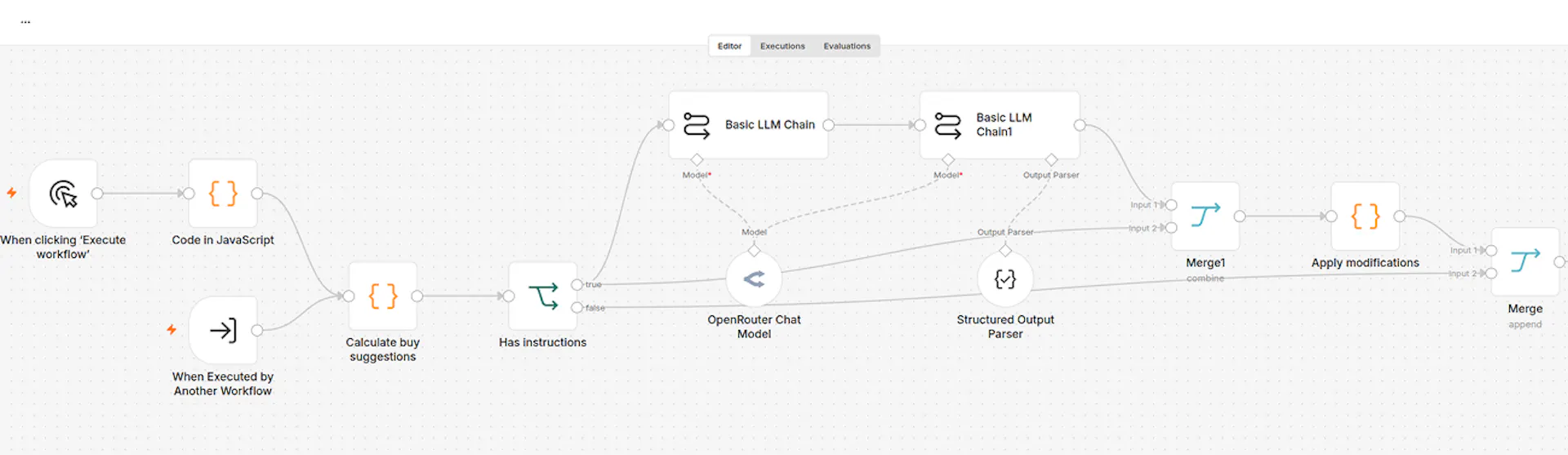
AI workflow that supports the buyer
Together with Travelbags, we developed an agentic workflow in n8n that automatically collects relevant data and translates it into concrete purchasing recommendations. The workflow takes factors such as these into account:
- Historical sales data
- Current inventory levels
- Expected demand
- Lead times
- Batch sizes
- Minimum order quantities
Based on this information, the workflow generates a well-founded recommendation for new orders. It is not a black box, but a transparent proposal that gives the buyer clear insight into the reasoning behind each recommendation.
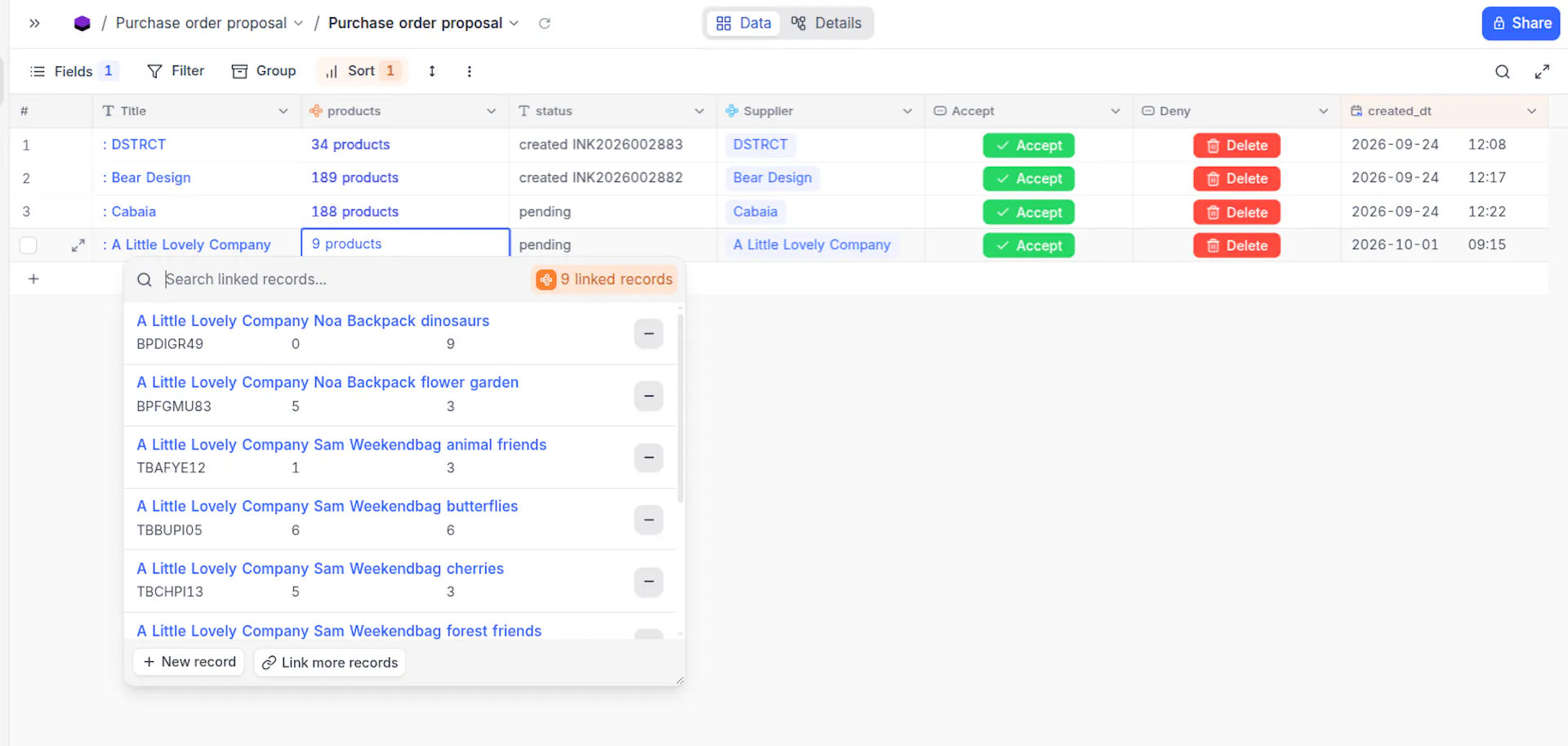
Always a human in the loop
Travelbags remains in control of the purchasing process. Buyers review, assess and adjust the generated recommendations where needed before placing an order. This creates a workflow in which AI handles the analysis, while human expertise remains central to the final decision.
Foundation for further AI automation
The solution does more than save Travelbags time. It also creates a scalable foundation for further automation. New variables, business rules or data sources are easy to add without having to build an entirely new process. This allows AI to evolve from a standalone application into a structural part of day-to-day operations.
What other retailers can learn from this
Many organizations are exploring AI for content creation, chatbots or personalization. But operational processes such as purchasing also offer significant opportunities for direct, measurable value. The Travelbags case shows that organizations often already have the data they need. The challenge is not collecting more data, but combining, interpreting and translating existing data into concrete actions.
That is where AI automation adds value: making existing processes smarter without losing control.