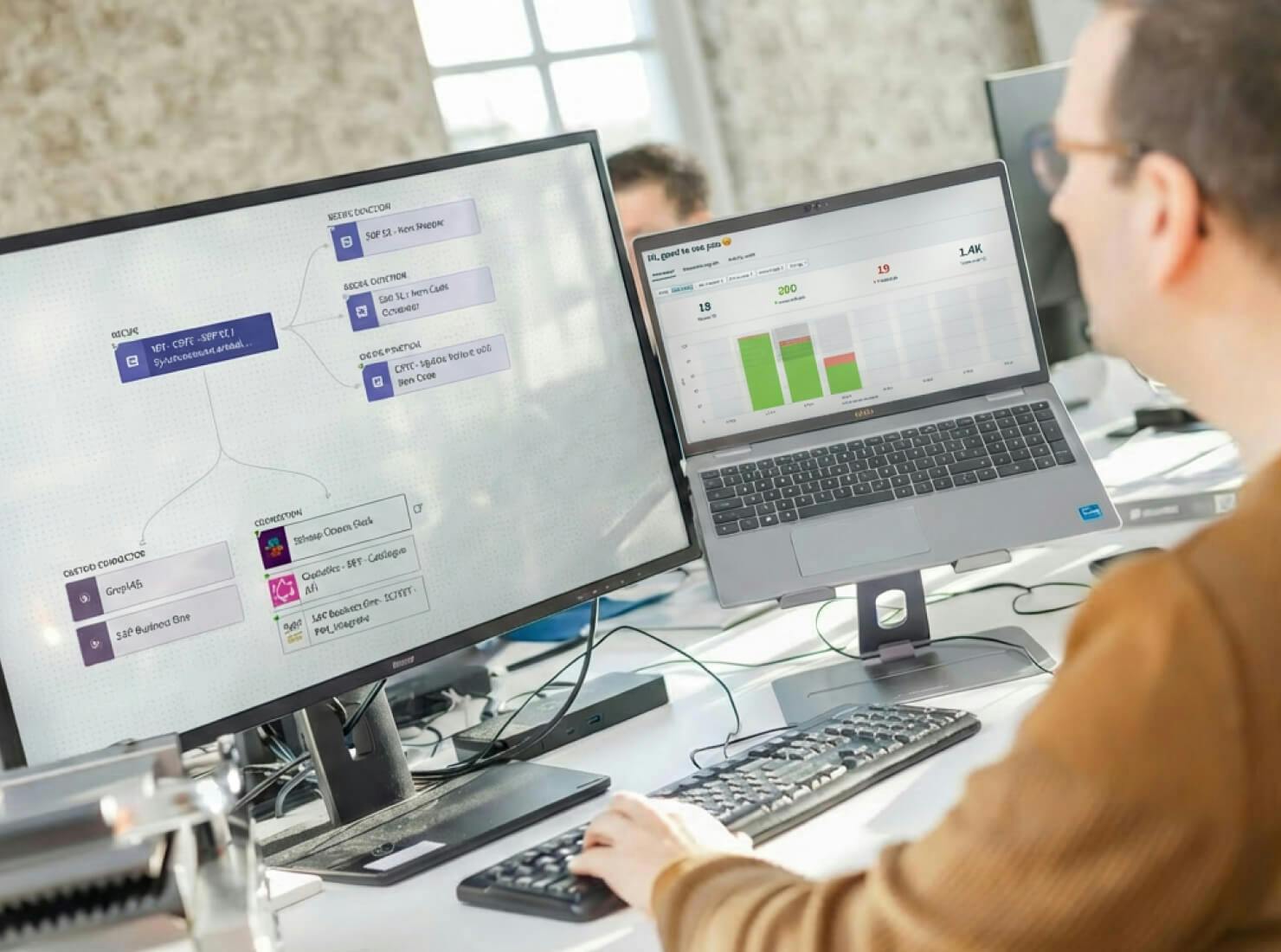
Without an integration layer, every new connection increases the risk of outages, data loss and higher costs

How to regain control over integrations

Together, we analyse your IT landscape, determine what is truly needed and implement the best fitting solution.
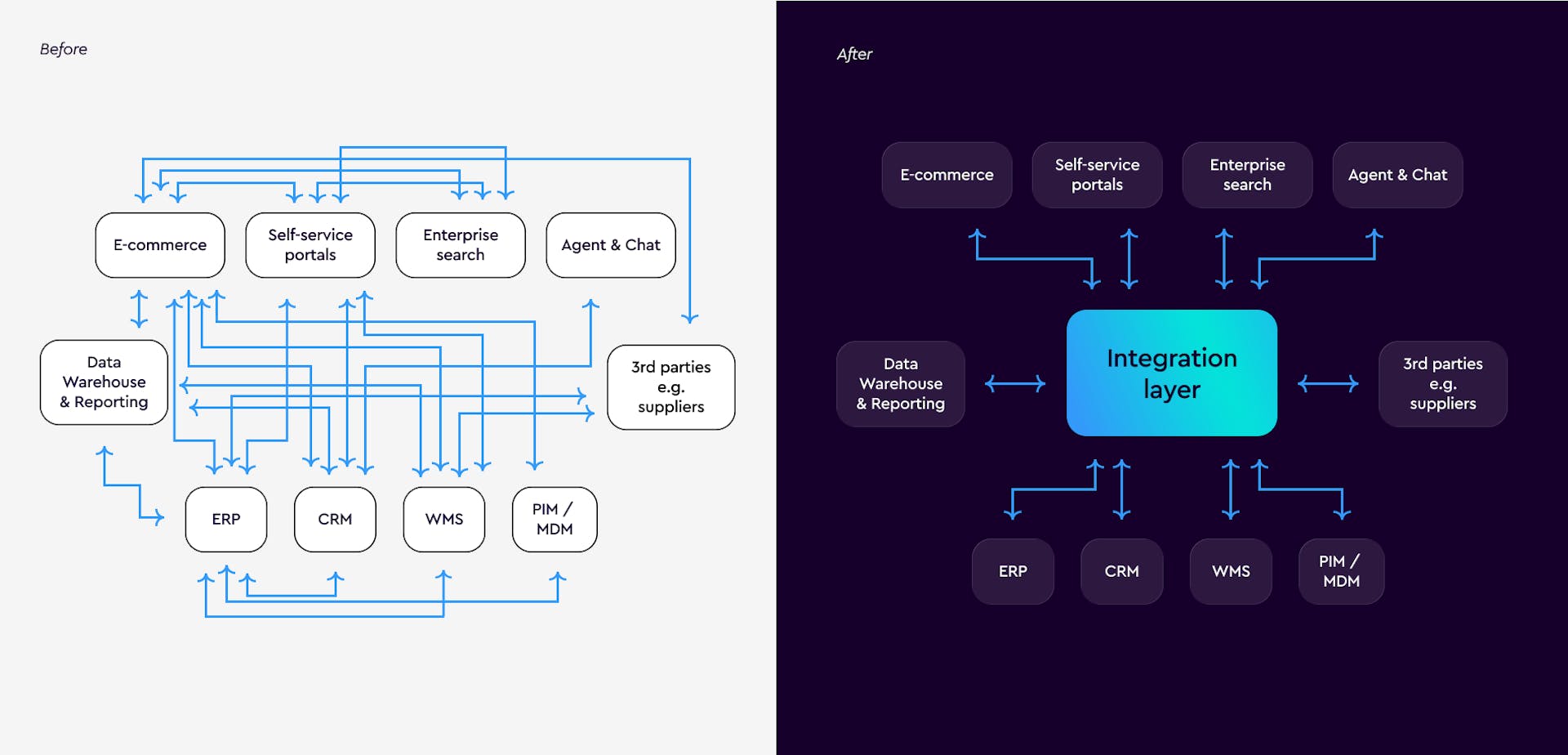
  1. IT landscape and impact scan (2 to 3 weeks)
    We start by mapping the systems, data flows and bottlenecks within your organisation. You receive a well founded business case covering lead time, risks and costs.
  2. Integration blueprint
    You receive a clear blueprint of your integration architecture. For each integration, we determine what works best: orchestration or choreography. In other words, central control and triggers versus autonomous communication between systems.
  3. Implementation and MVP flows (3 to 5 data flows)
    We begin with the most critical flows, such as product data from PIM to the webshop or order statuses to the CRM system. Together, we define clear performance standards, instructions and alerts per flow. This allows you to go live quickly with the most important data streams.
  4. Operating model and team training
    We help your team continue independently, with frameworks, best practices and clear agreements on ownership and further development. This lays the foundation for a future proof integration landscape.

What does it deliver?

A solid integration layer is essential, especially as systems need to connect faster and errors have immediate impact on revenue, operations and customer experience. Lay the foundation for modern tooling and benefit from tangible advantages in daily operations:

  • Ready for agentic AI: build on reliable data and take the step towards intelligent automation.
  • Streamlined processes with workflow automation: validate and automate processes using low and no code recipes with clear rules.
  • Less manual work: reduce the risk of errors through automated data flows.
  • Faster time to change: roll out changes more quickly, without surprises.
  • Insight into performance and costs: monitor performance and make data driven decisions, per flow and per domain.
  • Higher data quality: with data contracts, validation and monitoring as the foundation.
Schaap en Citroen
Control over integrations between two ERP systems and PIM with Workato
Read case

Your landscape determines the tool

The choice of an integration solution depends entirely on your landscape, processes and ambitions. Functionality and total cost of ownership outweigh logos. With our 25 years of experience, you can be confident that the right solution is selected and implemented in a way that truly fits your organisation. A selection of supported solutions:


  • Workato: enterprise automation and iPaaS with recipes, monitoring and AI agents.
  • Alumio: configuration first iPaaS with strong governance and transformation capabilities.
  • Microsoft Azure: Logic Apps, API Management and Data Factory for enterprise IT standards.
The integration specialists at XSARUS immediately understood our IT landscape. They took a pragmatic approach to defining the right integration flows and brought the knowledge and experience required to successfully implement Alumio.
Gerjan Horstra, Owner of Travelbags

These architecture principles make the difference

  • API and event first
    Everything is designed to be decoupled, flexible and scalable.
  • Data contracts and versioning
    Changes do not break anything; new versions run safely alongside existing ones.
  • Observability
    Full visibility through logging, metrics and tracing. You always know what is happening and why. Smart alerts allow you to act quickly.
  • Security by design
    Everything is set up for secure access, audit trails and GDPR compliance.
  • Resilience patterns
    Automated recovery mechanisms such as retries, circuit breaking and backpressure keep your integrations stable, even during disruptions.