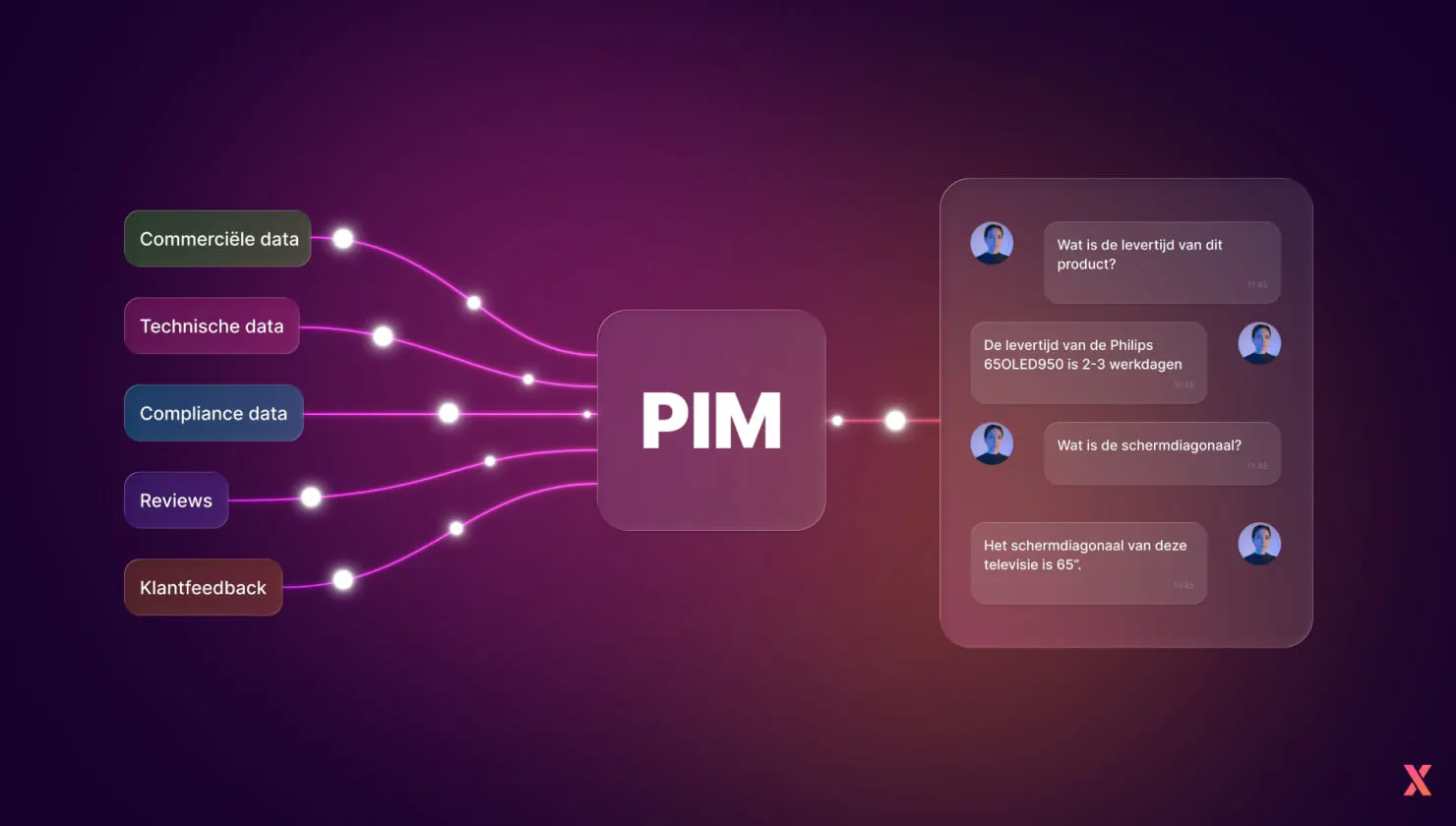
Pillar 1: Make your product data discoverable to AI

The Agentic Age is changing how your products are discovered, compared and recommended. In this series, we explore four pillars that show what this means for PIM and product data in practice. The first step? Making sure AI can find and understand your products. Discover why structure, metadata and classifications are becoming increasingly important for AI driven discovery.
The shift from search (SEO) to ask (GEO) is fundamentally changing how information is discovered and processed. AI does not read web pages the way people do. While traditional search engines rank pages, generative AI systems build their own answers based on the data available to them.
Interpreting data
Agents need to do more than find information. They must also interpret it. They look for structure, context and meaning in data. Metadata, classifications and taxonomies help AI systems understand what information is about, how attributes relate to each other and what context surrounds them.
This makes accessibility crucial. Information hidden behind logins, closed portals or systems that are difficult to access is practically invisible. Content that exists only as free text or lacks sufficient structure is also less likely to be included in AI generated answers.
If your productdata is not machine readable, your products are invisible
Strong product copy remains essential
Descriptive content helps large language models understand nuances, explain differences and cite sources. However, AI can only discover this content effectively when the underlying product information is accessible, structured and machine readable. In the past, poor visibility might have pushed your products to page two of the search results. Now, they might not appear in the answer at all.
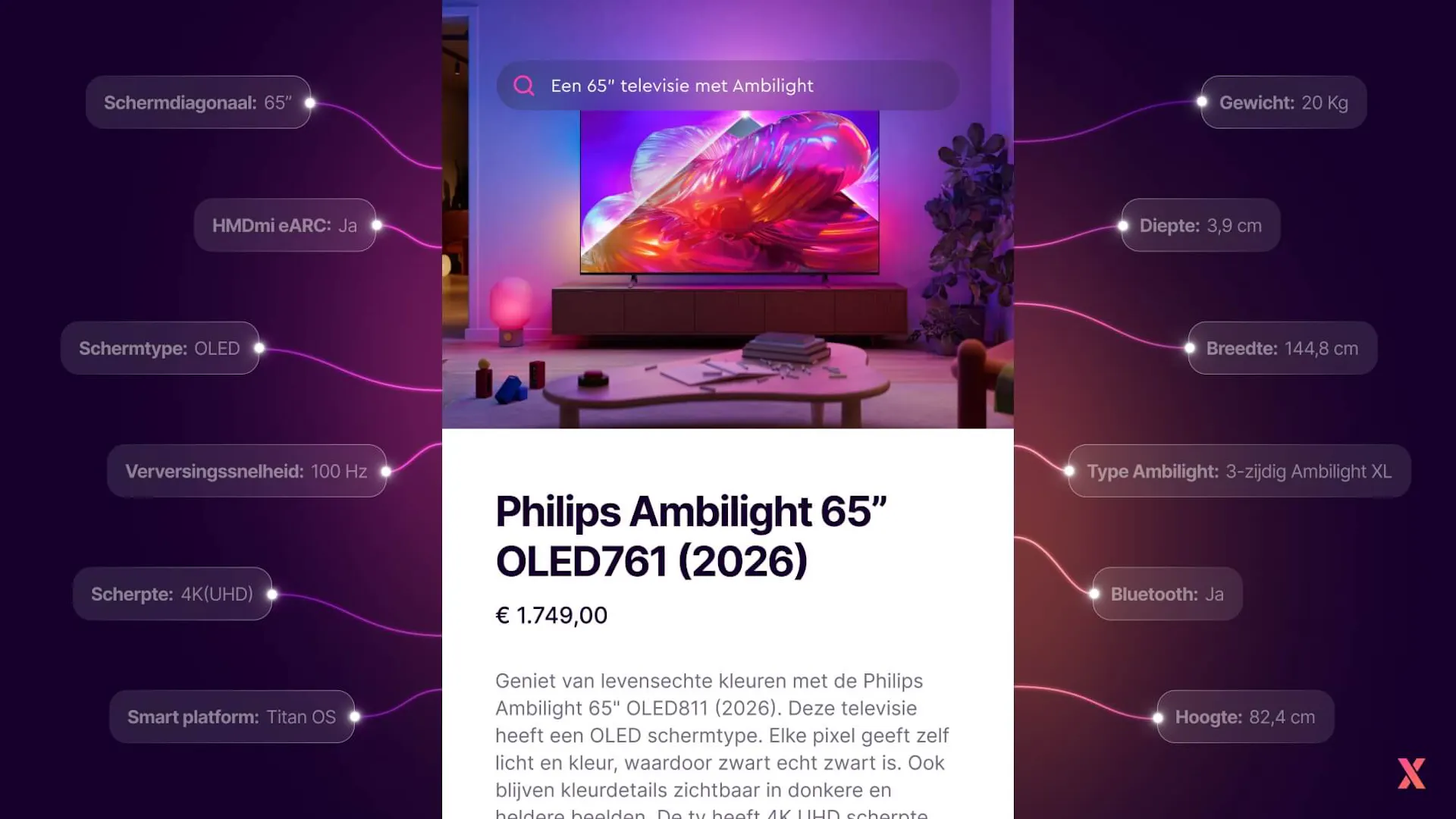
The role of PIM
Content and product data are not separate worlds. They need to work together. The PIM system becomes the central place where:
Descriptive content, metadata and attributes come together.
Terminology remains consistent across channels and use cases.
Taxonomies, classifications and relationships are defined.
Traditional PIM systems are often attribute centric, focusing on individual attributes and fields. In the Agentic Age, however, the need for additional meaning, context and connections is growing. Semantic models and knowledge graphs help make this additional layer of knowledge explicit.
What does this mean for your organisation?
Design your PIM data model so that content and data work together rather than exist as separate components. Ensure that meaning remains consistent throughout your data. Define terms, use consistent labels, add metadata and establish relationships between products, applications and classifications. This ensures that meaning is not only clear to people, but also understandable to machines.