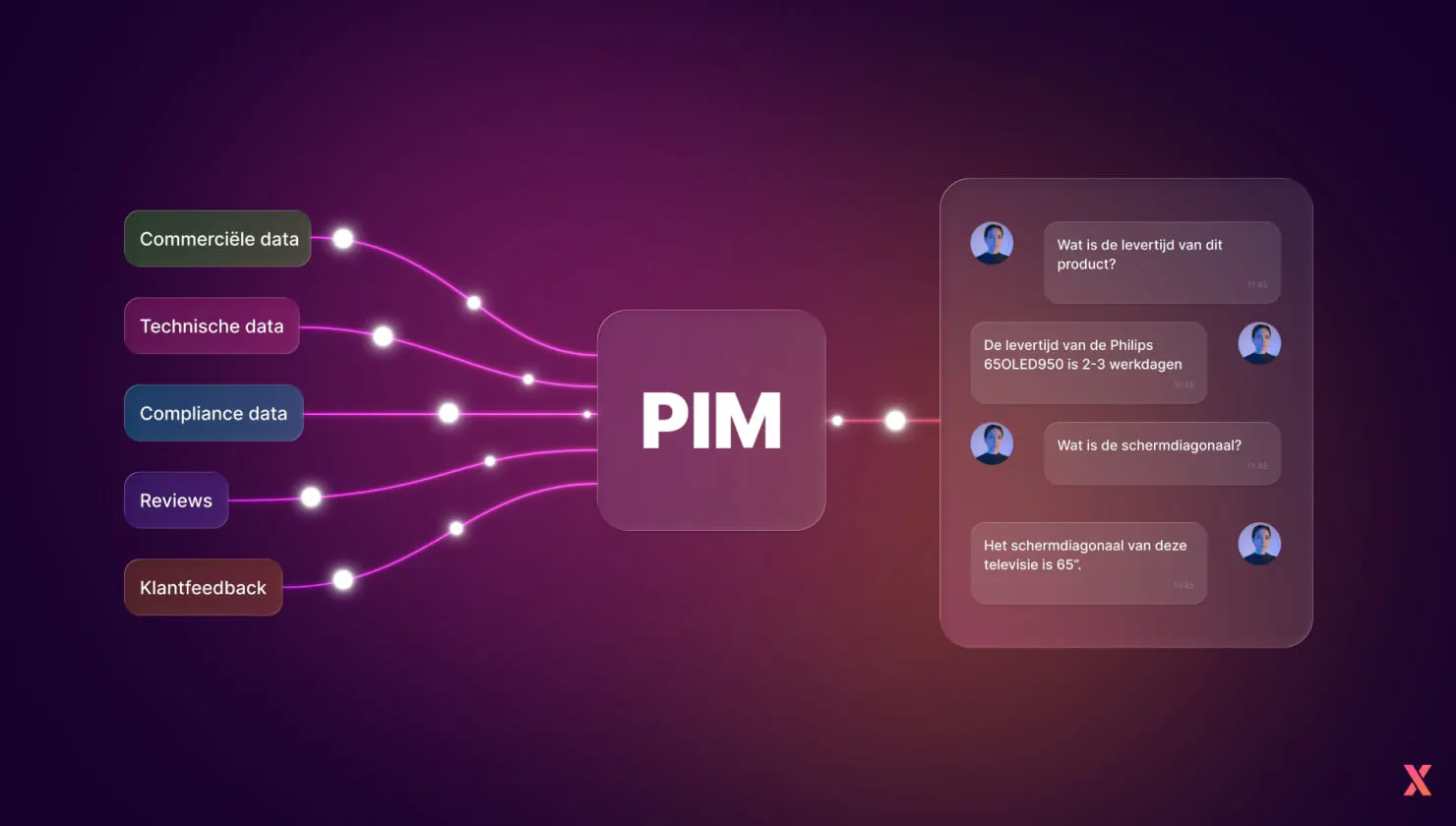
Pillar 2: Make sure AI includes your products on the shortlist

The Agentic Age is changing how your products are discovered, compared and recommended. In this series, we explore four pillars that show what this means for PIM and product data in practice. Being discoverable is not enough. AI selects products based on explicit and implicit criteria. Discover how complete, up to date and unambiguous product data determines whether your product makes the initial shortlist.
Agentic commerce is often associated with fully autonomous purchases. In practice, its impact lies elsewhere. AI agents increasingly take over the consideration phase, creating shortlists, comparing options, assessing risks and making recommendations. The final decision remains with a human, but that person works with an already filtered set of options.
Many products are ruled out before the comparison even begins
The initial filtering process is far from neutral
Complete and structured data may make your products discoverable to AI, but getting onto a shortlist requires data that provides sufficient certainty. Agents assess products against explicit and implicit criteria, including availability, compatibility, intended use, compliance, price to performance ratios and more. Products that lack clarity on these points are unlikely to make the AI shortlist.

The role of PIM
PIM makes decision criteria explicit. It records the product information AI systems need to compare, filter and evaluate products. This includes:
Product attributes that matter in comparisons.
Applications and compatibility.
The difference between strict requirements and additional recommendations.
PIM does not determine the final decision, but it does define the scope within which agents make recommendations and prioritise products.
What does this mean for your organisation?
Treat product data as a prerequisite for decision making. Analyse where AI systems are already influencing the initial selection process in your industry, whether in search, configuration, quoting or procurement. Identify the attributes that matter most and ensure they are available through PIM in a consistent, up to date and explicit format.
Think beyond product specifications. Also define how attributes should be interpreted. For example, a longer range may be a positive factor, while higher energy consumption may count against a product when an AI agent creates a shortlist.