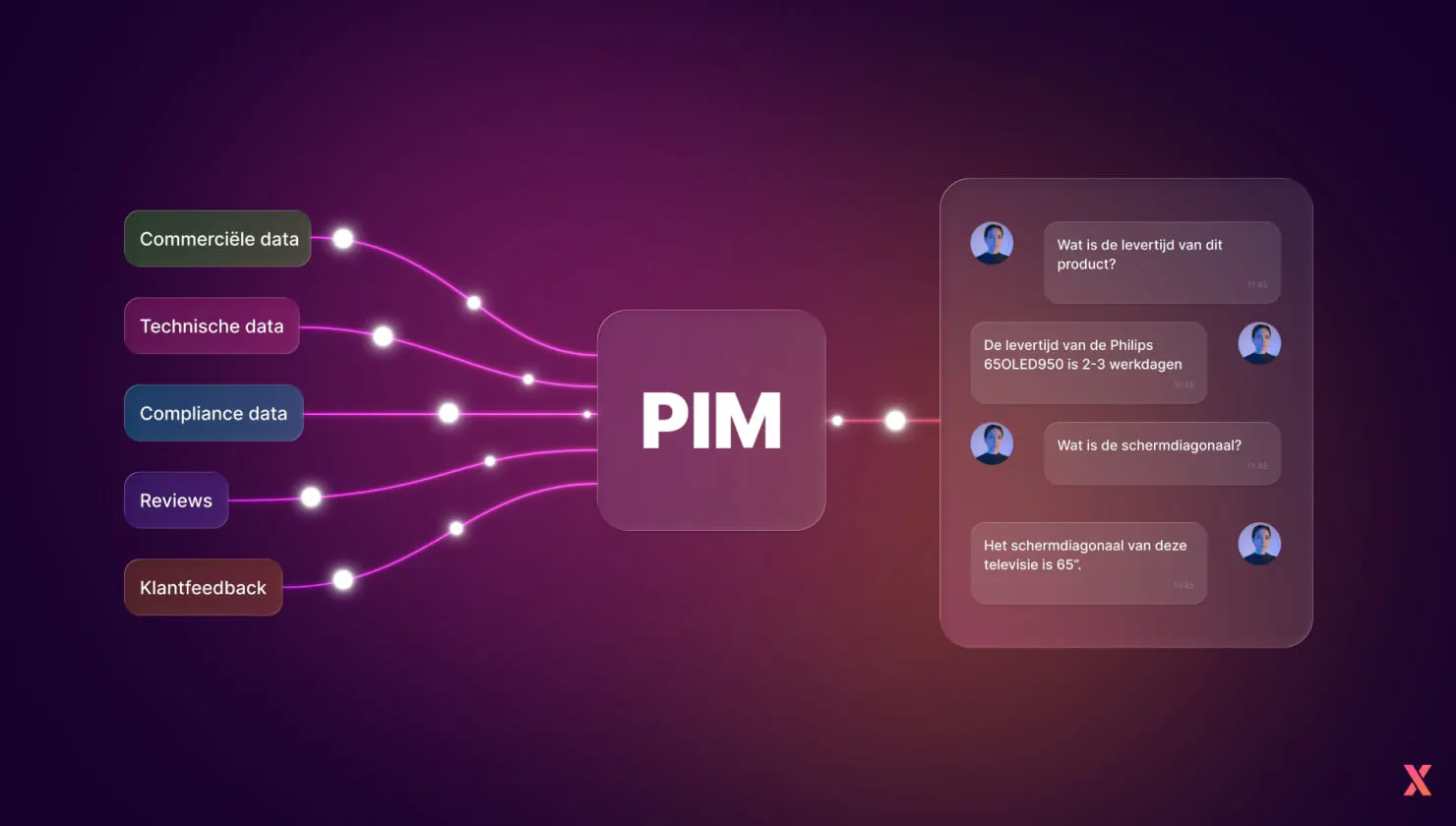
The new role of PIM: 4 pillars for product data in the Agentic Age

In our series on PIM in the Agentic Age, we explore four pillars that show what these developments mean for your PIM system and organisation. Have you read them yet? In this article, we translate these pillars into concrete actions.
The Agentic Age has begun: a world in which AI systems select and compare products and advise your customers. Not based on emotions, brand perception or compelling copy, but on data such as availability, specifications and compliance.
This shift directly affects the value of product information. A well designed PIM system does more than collect and publish data. It becomes the source that informs decisions. AI determines what is relevant, which products make it into comparisons and which ones remain out of sight.
In B2C, consumers use AI assistants and chat interfaces to discover products, compare options and prepare purchase decisions. In B2B, AI supports supplier research, shortlist creation, quote preparation and procurement.
From describing to decision making
What does this mean for PIM? Explore these four pillars to discover why and how PIM is shifting from describing products to informing decisions:
Conclusion: prepare your PIM for the Agentic Age now
The Agentic Age calls for a fundamental rethink of the role of Product Information Management within your organisation. The role of product data is changing, and PIM is becoming the foundation for better decisions. Not as a publishing tool, but as central infrastructure that shapes how products are perceived and interpreted by both people and systems.
If product data is not at the heart of your digital strategy, it becomes an afterthought. And in the Agentic Age, being an afterthought means being invisible.
1. Audit attributes for their decision making value
Look beyond the completeness of your product information. Identify which attributes AI systems need to compare, filter and recommend your products.
2. Add an interpretation layer
Define not only what an attribute means, but also how it should be interpreted. For example, when a higher value is positive and when it is not.
3. Enrich product data with expertise
Add context that goes beyond product specifications. Think of use cases, compatibility, compliance requirements, expert knowledge and frequently asked questions.
4. Make validation and source status explicit
Make it clear where information comes from, when it was last validated and which source takes precedence.
5. Make product information accessible to AI
Make data available through APIs, feeds and machine readable content. AI can only work with information it can access and interpret.
6. Start with one specific use case
Start small. For example, choose a product advisor, support assistant or sales assistant. This turns your vision into practice and prevents AI from remaining an experimental initiative without clear objectives.